Typical Garage Door Repair Issues and Exactly How Professionals Take care of Them
A garage door typically gets focus just when it stops doing its job. That makes good sense. When it functions, it is quiet, predictable, and easy to consider granted. When it does not, it becomes the loudest, heaviest, most troublesome moving component in your home. It can catch vehicles within, leave a building unsafe, or turn a typical early morning right into a wrestling suit with steel, springtimes, and a wall button that unexpectedly does nothing.
After sufficient time around garage doors, patterns begin to repeat. A lot of failings are not mysterious. They begin with a sound that was not there last month, a door that is reluctant halfway up, or a garage door opener that strains tougher each week until it surrenders. The actual distinction between a workable repair and a much larger costs typically comes down to acknowledging the cause early and understanding which tasks come from a trained technician.
Garage door fixing is one of those professions where experience issues because the signs and symptoms can misdirect home owners. An uneven door might look like a track trouble when the genuine problem is a broken cable. An opener that declines to shut may appear dead when it is just reacting to dirty security sensors. And a door that unexpectedly feels impossibly hefty is typically informing you that a springtime has actually fallen short, which is not a job for improvisation.
Why garage doors fail in the first place
Most garage door systems are long lasting, but they work under continuous stress and duplicated movement. A common residential door may cycle numerous times a day. Over a year, that builds up quickly. Springs exhaustion, rollers use flat areas, hinges loosen up, and opener parts soak up resonance each time the door starts and stops.
Weather also plays a bigger duty than lots of people understand. Cold temperature levels can thicken oil and make an aging opener audio rougher. Humidity can urge corrosion on springs and bearings. In hot environments, growth and tightening can impact track positioning and sensing unit brackets. Industrial garage door repair often tends to deal with these same concerns on a larger scale, frequently under larger usage and tighter functional demands.
Then there is installment quality. I have actually seen doors that were only a year or two old develop persisting problems due to the fact that the original garage door installment was hurried. Tracks were not plumb, spring stress was improperly stabilized, or the opener was undersized for the weight of the door. A negative set up does not always fall short right away. Occasionally it produces a sluggish chain reaction of wear that turns up later as noise, jerky movement, and busted parts.
The issue home owners see most: broken springs
If there is one repair service that transforms a door's habits quickly, it is spring failing. When a torsion springtime breaks, the door can go from operating typically one evening to seeming like dead weight the following morning. This happens since springs do most of the lifting. The opener overviews the motion, however the springtime system brings the load.
A common double garage door can weigh more than 150 extra pounds, and much heavier protected or timber doors can evaluate much more. When the springtime is intact, that weight is reversed. When the springtime breaks, the opener is instantly attempting to relocate a load it was never ever suggested to lift on its own. Sometimes home owners listen to a loud snap from the garage and assume something fell over. In many cases, it was the spring damaging under tension.
Garage door springtime replacement is one of one of the most typical service calls and one of the least ideal for do it yourself work. The danger is not overemphasized. Torsion springtimes save a remarkable amount of energy. Releasing or winding that energy improperly can create serious injury. Professionals approach this task with winding bars, locking pliers, proper dimensions, and an understanding of cycle ratings, shaft condition, and balance.
A great technician does more than exchange the busted springtime. They confirm the cable dimension, inside diameter, and size, then match the substitute to the real door weight and elevation. If the door formerly had the wrong springtime, changing it with the exact same wrong dimension only prolongs the problem. The repair should finish with the door stabilized so it can hug mid traveling without drifting up or crashing down. That equilibrium check matters as much as the brand-new spring itself.
It is also typical for specialists to advise replacing both springtimes on a two springtime system when one falls short. That recommendations is normally sound. Springs set up together often tend to put on together. If one has actually reached completion of its cycle life, the second is commonly stone's throw behind.
When the garage door opener is blamed unfairly
Openers get condemned for whatever since they are the noticeable machine people communicate with. In truth, many opener complaints begin in other places. If the door is heavy, misaligned, or dragging in the tracks, the opener is required to compensate. Over time, that results in removed equipments, overheated motors, or travel problems.
That said, garage door opener failings do occur. Older chain drive systems usually come to be noisy as sprockets and drive parts wear. Belt drive models are quieter, yet their electronic devices and reasoning boards can still fail with age or power surges. Wall switches break, remotes shed shows, and limitation settings drift. None of these signs and symptoms instantly mean the whole opener has to be replaced.
An experienced specialist normally begins with the simplest checks. Is power reaching the system? Are the picture eyes aligned and tidy? Has the emergency launch been partly involved? Is the door itself moving easily by hand with the opener separated? That last examination discloses a whole lot. If the door binds by hand, mounting a new opener will not resolve the underlying issue.
Modern openers likewise include force setups and take a trip adjustments that can be knocked out of calibration. A door that turns around before shutting right might have sensor problem, extreme friction, or a travel limitation set as well short. A door that closes and pops back open might be satisfying resistance at the floor because the close pressure is established also reduced or the floor is unequal. The fix is commonly exact modification, not replacement.
There are times when replacement is the smarter relocate. If an opener is fifteen to twenty years old, lacks modern safety functions, and requires major inner parts, a brand-new system often makes more sense than patching old innovation. Existing designs use quieter procedure, battery backup on some systems, and app based tracking that several owners genuinely discover useful. Still, experts recognize the difference in between a worn out machine and a healthy and balanced opener attempting to drag a bad door.
Doors that come off track or step unevenly
A door that shows up uneven is typically an indicator to stop utilizing it promptly. Uneven movement is not just a problem. It commonly points to a cable television problem, a bent track, damaged rollers, or a springtime discrepancy. Continuing to run the door can turn areas, damage the opener arm, or dispose the door completely out of the tracks.
This is just one of those cases where experience helps narrow the cause promptly. If one side is greater than the other, a training cable television might have slid from the drum or frayed enough to shed stress. If rollers are bulging, the track could be bent from effect or spread in addition to loosened fasteners. I have likewise seen cases where a cars and truck bumper clipped the lower section just sufficient to change the geometry and create a chronic tracking problem.
Professionals generally safeguard the door first, because the instant concern is avoiding additionally movement. Then they inspect cable drums, end bearing plates, track spacing, roller stems, and joint condition. If a cable television has actually come off because of a springtime issue, simply rewinding the cable television will not hold. The spring equilibrium must be dealt with first. If the track is bent, there is a judgment phone call. Minor bends can sometimes be remodelled. Serious kinks or turned vertical track areas must be changed, not hammered into a harsh approximation.
Commercial garage door repair teams see much more dramatic variations of this issue on packing doors and high cycle systems. Forklift traffic, repeated effects, and heavier door areas can multiply alignment issues promptly. The standard concept continues to be the very same: support the system, determine what shed tension or positioning, after that restore equilibrium prior to putting the driver back right into service.
The tiny elements that produce huge noise
Not every solution call involves a remarkable failure. Numerous start with a straightforward grievance: the door has actually obtained loud. Sound may seem cosmetic, however it is often the first useful warning. Screeching indicate completely dry rollers or hinges. Grinding can imply bearings are wearing. Balanced clacking commonly suggests a loose joint, a cracked roller, or a chain with inadequate tension.
A well tuned door has a distinctive sound. You listen to motion, however not distress. When that sound changes, experts listen carefully because the noise area frequently discloses the stopping working component. Nylon rollers with used bearings, for example, can rattle and babble long before they confiscate. Steel rollers are long lasting, however if ignored they can telegram every vibration via the track. Hinge knuckles can elongate gradually, permitting side to side play that appears as shake and slap when the door rounds the bent area of track.
The solution is hardly ever made complex, but it should be thoughtful. Good lubrication aids, but not every product belongs on every component. Experts utilize garage door specific lubricating substances on springtimes, joints, and bearings, while avoiding hefty oil that attracts dirt or mess up in cold weather. Rollers that have actually cracked wheels or loosened bearings are replaced, not merely sprayed. Loose hardware is tightened up to the ideal level, due to the fact that over firm can distort brackets or strip placing points in wood framing.
One useful truth home owners do not constantly listen to is that some doors are simply noisier by design. An uninsulated steel pan door with an older chain drive opener will certainly never ever seem like a costs shielded door on a belt drive system. Professionals can minimize noise substantially, yet they will certainly also set realistic expectations.
Sensors, security turnarounds, and closing problems
If a door opens great yet rejects to close, safety sensing units are high on the suspicious list. These picture eyes rest near the floor on either side of the opening. Their job is easy and important: if the beam is interrupted, the door should not shut. Dirt, vibration, misalignment, and sunlight glare can all interfere with that signal.
A homeowner may discover blinking lights on the sensing unit or on the garage door opener head. Commonly the solution is as simple as cleaning the lenses and straightening the brackets. However duplicated sensor problems can point to a much deeper issue, such as loose low voltage wiring, a bracket that moves whenever the door vibrates, or water breach near the connection points.
Experts additionally identify sensor issues from pressure relevant reversals. If the door starts down, fulfills resistance, and returns to the open position, the safety system may be responding correctly to friction or an obstruction. That can happen with swollen bottom seals, particles in the track, or a door that runs out balance. It is one reason precise medical diagnosis issues. A professional who just changes the sensors may miss the genuine resource of the reversal.
Panels, seals, and the damage you can see
Some garage door concerns are visible before they are mechanical. Dented panels, broke windows, torn bottom seals, and distorted weatherstripping all influence efficiency. A damaged panel does greater than harmed curb allure. If a section is curved enough, it can alter just how rollers track and exactly how joints bring the load.
Panel replacement is feasible on numerous models, yet it is not constantly cost-effective. The service technician has to think about the age of the door, whether matching sections are still available, and whether color discolor will certainly make a brand-new panel stand out. Occasionally a fixing is reasonable. Occasionally complete garage door setup is the much better long term choice, particularly if several areas are endangered or the door has a number of other worn components.
Weather seals are entitled to more interest than they normally get. A torn bottom seal lets in water, dirt, insects, and winter air. Side and top seals impact insulation and can minimize rattling. Replacing them is not attractive, but it is frequently among the most affordable ways to boost exactly how the door performs.
What experts examine that property owners usually miss
An expert solution check out is frequently important due to the fact that skilled eyes catch developing issues before they come to be failings. Throughout a routine residential garage door repair consultation, a specialist may discover a cord starting to fray, a center bearing plate shifting, or roller stems showing extreme play. None of those products might be causing instant problem, however each one can become the following emergency call.
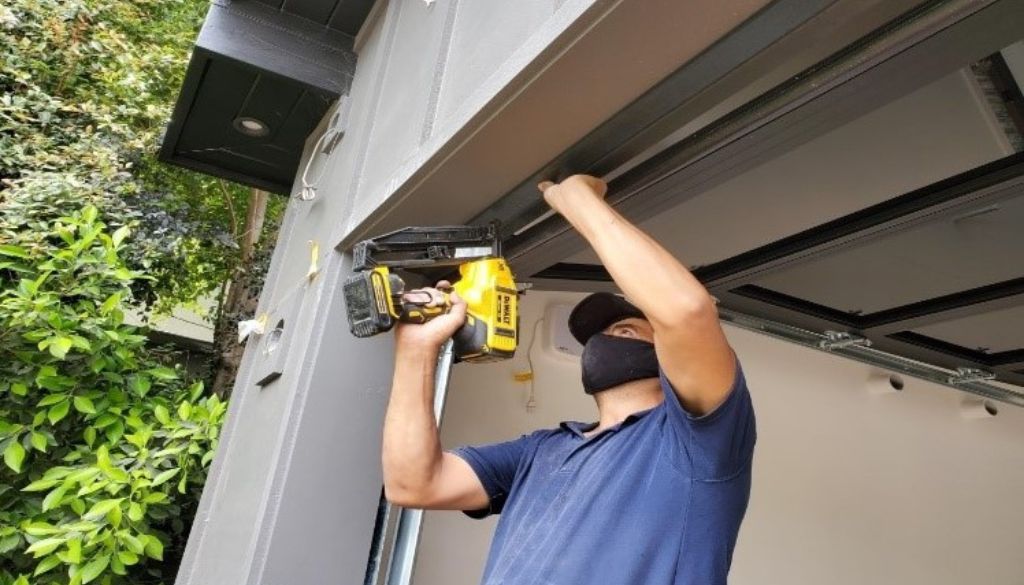
Here are a couple of indications that usually validate a solution call faster instead of later:
- The door feels larger than common when run manually
- One side rises erratically or the door looks uneven in the opening
- The opener pressures, hums, or reverses without a clear obstacle
- You hear a sharp bang from the garage complied with by inadequate operation
- Cables look loose, frayed, or out of their normal position
That type of early intervention typically conserves money. Replacing worn rollers and correcting equilibrium is far less expensive than replacing a burned out opener plus damaged track and joints after months of strain.
The distinction between household and commercial repairs
The principles overlap, however the context modifications. Residential garage door repair generally concentrates on comfort, safety, and daily reliability for a household. Industrial garage door repair adds functional stress. Downtime can impact shipments, staffing, and customer gain access to. Business doors are usually larger, cycle a lot more regularly, and may be incorporated with gain access to control systems, dock equipment, or fire ranked assemblies.
That adjustments repair work approach. A storage facility door with an unsuccessful springtime may require a momentary plan to maintain procedures moving while components are sourced. A rolling steel solution door might require a various ability than a sectional overhead door in a home garage. The hardware is heavier, the resistances are tighter, and the effects of inaccurate repair service can be a lot more significant.
It additionally alters maintenance concerns. In a home, a loud hinge can wait a week. In a service, a sluggish driver or falling short lower bar side may need very same day interest because safety and process get on the line.
When repair service is wise, and when substitute is smarter
Not every aging system must be kept active forever. Specialists weigh several elements prior to advising fixing versus replacement: door age, insulation value, part availability, architectural condition, and the advancing cost of repeated solution. A solitary broken spring on an or else audio door is an easy repair service decision. A twenty year old door with rusted areas, stopping working rollers, out-of-date tracks, and an opener on obtained time is a different conversation.
There is additionally a lifestyle element. A brand-new garage door setup can boost power efficiency, lower sound, and significantly change the look of a home. For some proprietors, the tipping factor is not one tragic failure yet a collection of smaller sized inconveniences that accumulate. If a door requires a panel, an opener, and Garage door spring replacement within a brief home window, numerous determine their cash is better spent on a fresh system with a warranty.
Good professionals do not push replacement when a simple fixing will do. They clarify the trade offs clearly. In some cases the honest answer is, repair it currently and allocate replacement in a year or 2. That sort of support deserves a lot.
Sensible maintenance that actually helps
Garage doors do not need continuous attention, however they do gain from basic treatment. The key is to focus on observation instead of high-risk change. House owners can safely do a whole lot by focusing on how the system appears and moves.
A straightforward upkeep routine generally includes these activities:
- Watch the door open and close a few times, and keep in mind any brand-new jerking, dragging, or jagged travel
- Keep the tracks clear of particles, yet do not layer them with grease
- Clean the security sensor lenses and see to it the brackets have actually not been bumped out of line
- Lubricate joints, springtimes, and bearings with an item intended for garage doors
- Test the opener's turnaround feature according to the supplier's instructions
What house owners need to not do is just as essential. Do not loosen springtime hardware, effort cable television resets, or maintain compeling an unbalanced door with the opener. That is exactly how a minor problem comes to be a significant repair.
What a strong repair see looks like
The finest garage door repair work is not commercial garage door maintenance rushed. A strong service technician evaluates the whole system, not simply the obvious damaged part. They ought to detach the opener and test door equilibrium manually. They need to check tracks, rollers, joints, cable televisions, springtimes, and mounting equipment. If an opener issue is entailed, they need to assess the door initially prior to advising maker replacement.
They ought to also interact plainly. If the springtime is damaged since the door was inadequately stabilized from the start, that need to be discussed. If the bottom panel is structurally weak and might not stand up after repair, that ought to be stated simply. There is a sensible honesty in great trades function. You want the person at your garage to inform you what is urgent, what can wait, and what is most likely to stop working next.
That is specifically real with repeat troubles. A door that maintains eating rollers or slipping cable televisions is generally informing a bigger tale. Perhaps the track spacing is wrong. Maybe the springtime sizing was never appropriate. Perhaps the framing has actually changed enough to influence placement. Experts resolve those root causes. Jumble solutions just postpone the next service call.
A garage door is not one of the most glamorous system in a structure, however it is one of the most made use of. When it falls short, the hassle is prompt. When it is fixed properly, the result really feels nearly invisible, which is exactly the point. The door moves efficiently, seals appropriately, and raises with much less strain than you recognized it had actually been lugging. That is what professional job appears like in this trade. It restores the type of typical procedure individuals quit observing, till the day they do not have it.