How Regular Commercial Garage Door Repair Stops Downtime
A commercial garage door hardly ever gets much attention when it is doing its job. It opens up at 5:30 in the early morning for the very first delivery van, cycles throughout the day for personnel, forklifts, and outbound products, after that closes at night without complaint. That quiet reliability is simple to take for given. The trouble starts when a door hesitates, jerks, grinds, or stops halfway with a trailer waiting outside and a stockroom group standing still.
At that factor, the door is no longer just a building element. It ends up being a bottleneck.
In commercial settings, downtime spreads quick. One door inactive can delay receiving, disrupt hosting, affect shipping cutoffs, force team to reroute website traffic, and create safety exposure for anyone trying to function around the issue. A lot of proprietors first require commercial garage door repair when the issue ends up being difficult to disregard. By then, what might have been a reasonably small solution phone call might already be costing them in labor, missed out on timetables, and avoidable parts damage.
Regular repair service and maintenance job is what keeps small flaws from becoming functional failings. Not cosmetic work, not busywork, and not a sales pitch for changing whatever on the track. Simply self-displined attention to the parts that wear under hefty use, and quick improvement when something begins wandering out of spec.
The real price of a door that falls short at the wrong time
Most services recognize the cost of devices downtime inside the structure. They track forklifts, conveyors, refrigeration units, and loading systems carefully because a breakdown has an immediate production influence. Overhead and rolling steel doors deserve the exact same mindset.
An industrial door might cycle loads of times per day in a tiny operation and more than a hundred times in an active storage facility, vehicle center, warehouse, or municipal building. Each opening and shutting cycle areas stress and anxiety on springtimes, rollers, joints, cables, bearings, tracks, seals, and the garage door opener. Components do not fall short simultaneously. They degrade in phases. The warning signs normally show up first as noise, slower travel, irregular movement, or periodic reversing.
If those indicators are ignored, the financial hit often tends to show up in layers. Initially comes the obvious repair work bill. After that there is labor standing still, trucks waiting on the apron, overtime to recover lost throughput, and sometimes spoilage or client fines if deliveries miss out on tough deadlines. For facilities with safety or climate control requirements, a stuck-open door includes one more problem entirely. Conditioned air runs away, dust and parasites enter, and security treatments come to be harder to enforce.
I have seen operations lose even more money from a half-day delivery disruption than from the repair service itself. In one storage facility, a worn cable television and disregarded roller collection triggered a sectional door to rack in the opening prior to the mid-day service provider pickup. The fixing was not particularly complicated, yet the jam happened at specifically the wrong hour. Team needed to relocate staged pallets to an additional bay, rework packing order, and maintain a chauffeur waiting. The invoice for the service telephone call was the tiniest line thing in the entire episode.
Why routine fixing matters much more in industrial setups than in domestic ones
There is overlap in between household garage door repair and business service, however the operating Great site setting is different sufficient that owners need to not treat them the same. A home door may open up a handful of times each day. A commercial door often functions harder in a week than a property door performs in a month.
That higher cycle count adjustments every little thing. Springs tiredness quicker. Rollers put on level spots. Bolts loosen under resonance. Track alignment comes to be more delicate. Openers on industrial systems likewise deal with larger lots and even more requiring gain access to control setups. A facility might incorporate timers, keypads, remotes, activity sensing units, safety and security eyes, or fire-door launch functions. Each extra touchpoint includes an upkeep responsibility.
Commercial doors additionally bring operational danger that a house owner normally does not encounter. If a domestic door stops working, it is bothersome. If a storage facility door falls short, production and delivery can stop. If a service-bay door stops working in an automobile store, lorries stack up and specialists shed billable hours. If a door serving a chilled location falls short, energy waste starts immediately. That is why regular commercial garage door repair need to be viewed as uptime defense, not simply developing maintenance.
The tiny problems that end up being significant interruptions
Most emergency calls begin with a signs and symptom that had actually been present for days or weeks. Occasionally much longer. Personnel notice that the door sounds rough, closes harder than usual, or needs a second effort to respond. Due to the fact that the door still functions a lot of the moment, the issue gets brushed off. The risk in that thinking is that worn components hardly ever stay isolated.
A split joint can move lots to bordering areas. A torn cable can toss the door out of balance and rise pressure on the opener. Dry bearings create drag, which can exhaust the electric motor and reduce its life. Harmed lower seals let in water and particles, which after that interfere with track problems and develop slip threats near the limit. What starts as a basic change can end up being a chain reaction.
The same holds true of springtime systems. Garage door spring replacement is frequently postponed because the door still opens. But springtimes shed stress slowly prior to they fall short totally. As that balance changes, the opener works harder to relocate the lots. The door might slam shut faster than made or struggle to stay open at the appropriate elevation. By the time a springtime snaps, the facility is managing both a security problem and a difficult drop in operations.
What a normal service program really prevents
When individuals listen to the expression garage door repair, they typically imagine only responsive job after something breaks. In practice, excellent repair service programs mix corrective service with assessment and adjustment. The objective is to capture conditions that are on their means to failure.
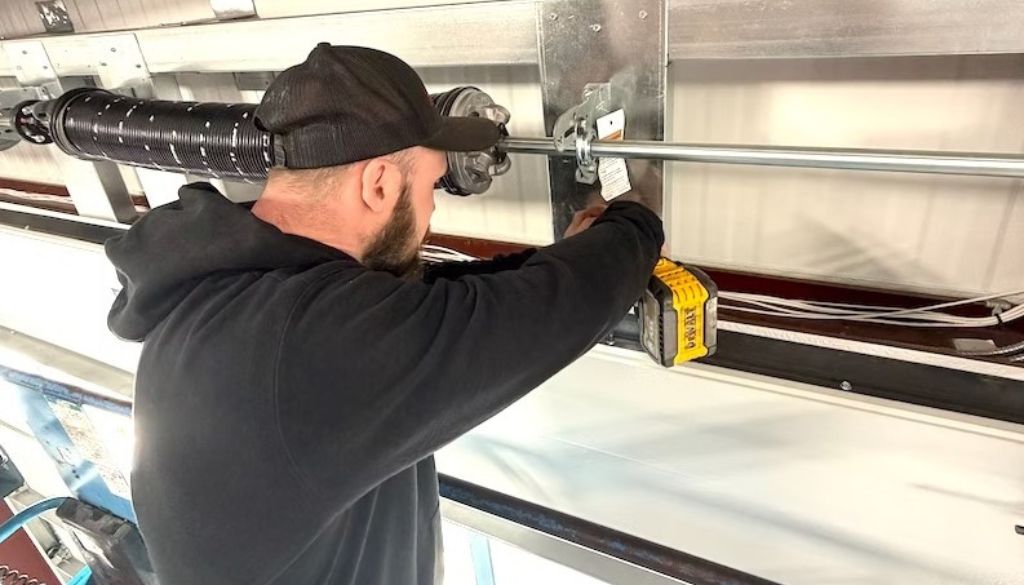
A professional acquainted with industrial systems tries to find predictable wear patterns. Rollers can loosen up inside their stems. Tracks can wander out of positioning from forklift effect or vibration. Drums and cords can use erratically. Safety and security tools might still function, yet not with the correct feedback time or positioning. Installing equipment can back off over time, especially on high-cycle doors. These are not remarkable failures when they start. They are the kinds of problems that develop emergency situation calls if nobody steps in early.
That is where regular solution settles. A set up visit could identify a cord with noticeable fraying, a door area beginning to break near a joint factor, or an opener contactor showing irregular procedure. Changing or repairing those components under regulated conditions is always easier than doing it while a line of vehicles waits outside.
In numerous centers, precautionary repair also prolongs the valuable life of the full door system. That issues because business garage door installment is a larger capital expenditure than many owners expect, specifically when the opening is oversized, insulated, wind-rated, or incorporated with packing dock equipment. Delaying unneeded replacement by a couple of years through disciplined maintenance can be a clever economic move, gave the door continues to be safe and structurally sound.
Warning signs worth treating seriously
The finest time to require service is before the door falls short. Center managers do not need to detect every part, however they ought to recognize when a sign is entitled to attention.
- The door relocates erratically, binds, or appears crooked in the opening.
- Opening or closing takes longer than normal, or the opener stress and hesitates.
- Staff hear grinding, standing out, squealing, or a tough effect at full close.
- Cables reveal fraying, rollers totter, or hinges and braces look bent or loose.
- The door turns around unexpectedly, will not close fully, or safety and security devices act inconsistently.
None of these indicators assure a major repair, but every one points to use, discrepancy, blockage, or control issues that should be checked quickly. The earlier the phone call, the larger the repair choices normally are.
The duty of the garage door opener in avoiding shutdowns
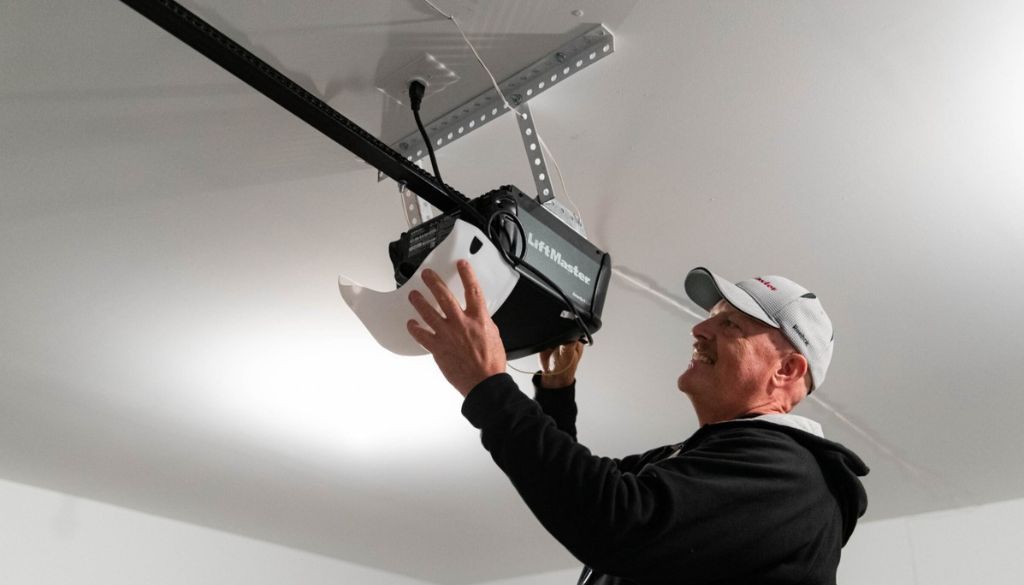
When individuals speak about business door dependability, they usually concentrate on springtimes and equipment first, that makes sense due to the fact that those parts take a lot of mechanical misuse. Still, the garage door opener is worthy of equal focus. A healthy driver does more than move the door. It controls rate, limitation travel, responsiveness, and security inputs. If it befalls of modification or begins to stop working electrically, the whole system comes to be unpredictable.
I have seen doors misdiagnosed as track or springtime troubles when the root issue was really in the operator controls. A failing restriction button can cause overtravel. Worn drive components can develop jerking activity. Electrical faults can produce recurring operation that is hard for staff to explain and even harder for supervisors to schedule around. Someday the door works penalty. The following day it stops three feet short of complete open and creates a line up at the dock.
Regular solution helps separate true structural wear from control-system problems. It also offers specialists a chance to verify photo eyes, side sensors, and emergency launch features. That matters for uptime, however it matters even more for safety. A door that does not stop or reverse correctly is greater than an inconvenience.
Why delayed springtime work is one of the costliest mistakes
Garage door spring substitute is often misinterpreted because springtimes are hidden from everyday interest. If the door still moves, several think the springs are fine. In truth, springs can be severely worn down while the opener compensates for the loss.
That compensation comes at a price. Openers are not designed to lug an out of balance door forever. They are made to guide a correctly counterbalanced system. When the spring tension goes down as well much, the opener draws harder, runs hotter, and puts on faster. Door traveling ends up being rougher, cable televisions can loosen up or jump, and the risk of a sudden failure rises.
For high-cycle business doors, springtime life ought to be talked about in practical terms. Not just years, yet cycles. A spring rated for a certain cycle count may wear out swiftly in an active center and last much longer in a low-traffic one. That is one factor generic upkeep schedules can fall short. A door used 10 times a day and a door utilized eighty times a day must not be dealt with as though they age at the very same pace.
When springtime replacement is dealt with proactively, the job can be set up around operations. When a spring breaks unexpectedly, the conversation modifications from planning to harm control.
Repair versus substitute require judgment, not habit
Not every aging door need to be fixed permanently. There comes a point when duplicated service phone calls, out-of-date components, structural tiredness, or running inadequacy make a brand-new industrial garage door installation the better action. The challenge is acknowledging that point without changing a door as well early.
A good service provider must be able to clarify the trade-off plainly. If a door has strong panels, a noise frame, offered parts, and a manageable repair service demand, solution usually makes sense. If the sections are terribly damaged, the track geometry is jeopardized, corrosion is extreme, or the driver and security systems are outdated enough to create recurring failures, replacement may secure uptime much better than one more patch.
This is where experience issues. Owners do not need a person that pushes a brand-new mount each time a door squeals, and they do not require a person who maintains revitalizing a failing system simply to stay clear of a hard discussion. The best advice weighs fixing price, remaining life, usage strength, and business influence of one more failure.
There are also combined situations. Occasionally the most effective solution is not a complete replacement, yet a targeted modernization. A company may maintain the door framework while replacing the garage door opener, springs, seals, and control components. That can supply a large dependability gain without the complete expense of a new system.
Scheduled repair service secures more than mechanics
The most evident benefit of normal business garage door repair is minimized downtime, yet that is not the only benefit. Constant solution additionally protects safety, power performance, and workflow.
A door that shuts correctly against a healthy and balanced seal assists manage dust, climate, insects, and conditioned air loss. In facilities with temperature-sensitive stock or work areas, that matters daily. A door that takes a trip efficiently likewise lowers the temptation for workers to improvise. When a door begins sticking, people discover workarounds. They prop openings, tug areas manually, bypass regular access points, or operate around damaged parts. Those routines develop risk.
There is likewise an administrative advantage. Planned fixings are much easier to spending plan than emergency situation disruptions. Center managers can group service telephone calls, file repeated concerns by opening up, and forecast when bigger funding choices may be coming. That sort of presence is important in multi-site operations where small building failures tend to multiply if they are not tracked carefully.
What a practical upkeep rhythm looks like
There is no global calendar that fits every property. Use intensity, door size, ecological problems, and the kind of organization all matter. A messy industrial facility, a seaside residential property with rust direct exposure, and a low-traffic storage structure will certainly mature in a different way even if they utilize similar doors.
Still, a practical service rhythm generally consists of regular evaluations, prompt adjustment of small defects, and immediate response to any kind of modification in traveling, noise, equilibrium, or control behavior. High-cycle doors may need interest a number of times each year. Lower-cycle openings may be great with much less frequent sees, supplied staff record issues very early and the doors are not running in rough conditions.
The key is not chasing after a stiff day on the calendar. It is matching service frequency to real wear. That requires communication between website team and the company. If getting teams start observing slower lift, if upkeep personnel see frayed wires, or if the opener journeys inconsistently, those observations need to activate activity instead of being in a note pad until the next quarter.
Choosing the right repair partner
A service does not need the least expensive available technician. It needs a fixing companion who understands industrial operating pressure and treats downtime as a severe service event. The distinction shows up in exactly how they evaluate, interact, and prioritize.
A solid solution firm explains what failed, what is putting on, what should be kept an eye on, and what can fairly wait. They understand the truths of packing schedules and try to strategy function around them. They know the difference in between residential garage door repair practices and the demands of heavy business systems. They also document components condition all right that a center supervisor can make spending plan decisions without guessing.
The ideal technicians I have actually collaborated with were not significant. They were systematic. They spotted patterns. They noticed when one bay kept heading out of positioning as a result of duplicated forklift contact. They explained when an apparently arbitrary opener concern was linked to a stopping working control station. They prevented failings due to the fact that they took notice of the whole operating context, not simply the part that took place to be broken that day.
Downtime avoidance is normally constructed in the peaceful moments
Most reputable industrial doors do not stay trustworthy by chance. They stay reliable because somebody responds when the door begins debating, whether that means noise, resonance, hold-up, or inequality. Routine business garage door repair works since it obstructs wear before wear comes to be stoppage.
That approach is less dramatic than an emergency situation rescue telephone call, however much more important. It maintains shipping lanes moving, team productive, and security risks reduced. It shields the opener from unneeded stress, catches springtime problems prior to they become failings, and helps owners determine when repair work still makes good sense and when industrial garage door installment need to enter the conversation.
For any company that relies on open bays, timed pick-ups, or regulated gain access to, the door becomes part of operations. Treat it in this way, and downtime comes to be a lot easier to avoid.