Garage Door Spring Substitute: Comprehending Torsion and Expansion Springs
A garage door can evaluate anywhere from 130 extra pounds for a basic single steel door to well over 300 pounds for a shielded dual door, and custom timber doors can climb a lot higher. The factor that much weight really feels workable when you raise the door by hand, or when a garage door opener elevates it with a modest motor, comes down to one point: spring tension.
When a springtime breaks, the whole system discloses itself at the same time. The opener pressures. The door jerks, stalls, or bangs shut. House owners usually assume the trouble is the opener since that is the noticeable equipment in the center of the ceiling. In practice, the opener is commonly simply the first component to grumble. The real problem is generally at the springtime assembly.
Garage door spring substitute is one of those repairs that looks less complex from the driveway than it is up close. I have actually seen doors that were one poor cycle away from coming off track, openers with removed gears since a person maintained attempting to compel a damaged springtime door to run, and substitute tasks made complex by earlier shortcuts, wrong springtime sizing, or mismatched equipment. Understanding the distinction in between torsion and expansion springtimes aids you make better choices, whether you are setting up property garage door repair, evaluating a quote, or attempting to comprehend why one fixing costs greater than another.
Why the springtimes matter greater than most people realize
Springs are the counterbalance system for the entire door. They keep energy when the door closes and launch it when the door opens up. Without them, the opener would certainly need to raise the complete dead weight of the door on every cycle, and many openers are not developed for that. Their work is to direct and relocate an effectively well balanced door, not work as a crane.
A healthy garage door should stay virtually in position when raised halfway by hand. If it races downward, really feels unusually heavy, or drifts upward on its own, springtime stress is most likely off. That does not always indicate a spring has actually broken. Springs additionally damage gradually. Steel exhaustions. The door may still move, but the equilibrium factor changes. That gradual loss of performance is simple to miss till the day the springtime ultimately provides out.
This is where garage door repair ends up being much less concerning a solitary broken component and more regarding system wellness. Springs affect cable televisions, rollers, hinges, track placement, and opener life. When the door runs out equilibrium, those components lug stress they were never ever implied to absorb.
Torsion springs and extension springtimes are built for the very same work, yet they do it really differently
Most contemporary garage doors utilize either springtime systems. Both counterbalance the door, yet the method they keep and deliver power is entirely different.
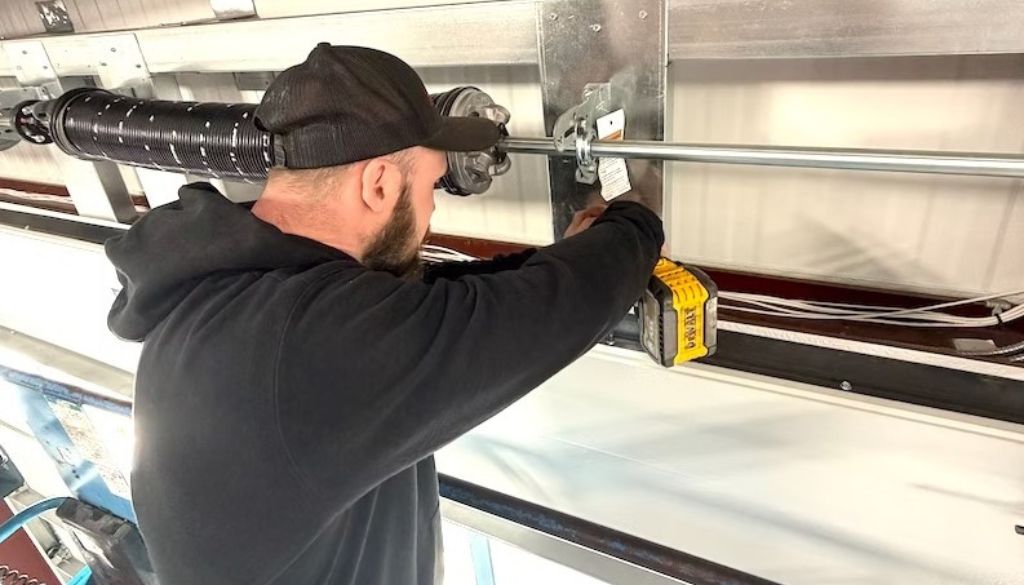
Torsion springtimes install on a steel shaft above the garage door opening. As the door shuts, the springtimes wind tighter, keeping rotational power. When the door opens, that energy loosens up through cable drums at each end of the shaft, raising the door in a regulated way.
Extension springs stretch along the straight tracks on either side of the garage. As the door shuts, they elongate and store power in stress. When the door opens up, they get and aid draw the door upwards with a pulley-block and cable arrangement.
That basic design distinction influences whatever else, including life-span, level of smoothness, noise, solution intricacy, and safety.
Torsion springtimes: the criterion for a lot of modern systems
If you look above your garage door and see a steel tube or shaft with a couple of snugly wound springtimes around it, you have a torsion system. This is currently the liked configuration for most brand-new garage door installment job, especially on sectional residential doors and lots of business doors.
Torsion springtimes supply smoother, more regulated motion than expansion springtimes. The lifting pressure is dispersed via the shaft and drums, which tends to decrease door guide and track anxiety. On bigger double doors, that security issues. A door that increases evenly lasts longer and positions much less stress on the opener.
They likewise tend to use much better durability when effectively sized. A basic torsion springtime may be rated around 10,000 cycles, with one cycle being a full open and close. Higher-cycle options, commonly 20,000 cycles or even more, are readily available and worth considering for families where the garage acts as the primary entry. In several homes, the front door gets less use than the garage. 4 to 6 cycles a day builds up faster than individuals think.
From a service point ofview, torsion systems are more specific. That is both a benefit and a risk. The spring size need to match the door weight, height, drum dimension, and track configuration. Proper winding needs specialized bars, accurate turn counts, and attention to shaft placement, cable television tension, and established screw placement. A good service technician can dial in the equilibrium beautifully. An untrained person can develop a harmful condition in minutes.
Extension springtimes: still common, but less forgiving
Extension springtime systems are frequently discovered on older domestic doors, lighter doors, and budget-conscious installations. As opposed to placing above the header, they run parallel to the straight tracks. When they break, the failure is typically noticeable. A spring may hang loose, the door might come to be irregular, or one side might quit raising altogether.
These systems can function well when kept appropriately, but they are normally noisier and much less refined than torsion arrangements. Since the springtimes stretch and contract along the tracks, they can add to more noticeable activity and vibration. Pulleys, sheaves, safety and security cords, and hook attachments all contribute, which indicates there are more use indicate inspect.
One vital information with extension springtimes is the safety cable television. This cable goes through the center of the springtime and aids have it if the spring snaps. On older doors, I still periodically see expansion springtimes without security cable televisions, which is a major concern. A damaged extension springtime without a safety cable can whip with force, harmful autos, drywall, kept items, or even worse, hurting someone nearby.
Extension systems are in some cases cheaper to change at first, yet they often require closer attention to surrounding equipment. Worn pulleys and torn cables prevail friends to a worn out expansion springtime. Replacing only the springtime and overlooking those components can turn a cheap repair service into a repeat solution call.
How to tell which type you have
The most convenient method to determine the system is by location. Torsion springtimes rest directly above the door opening up on a shaft. Extension springtimes sit next to the top horizontal tracks, one on each side.
If the door has a solitary long springtime placed flat over the center of the door, that may be an older torque or specialized arrangement instead of a conventional torsion assembly. Those systems exist, though they are less common. In those instances, exact identification issues because substitute parts are not always interchangeable with present standard hardware.
For both home owners and residential or commercial property managers, excellent pictures aid when calling for garage door repair. A façade of the entire door, a shot of the spring location, and close-ups of any kind of broken or hanging parts can save time and avoid misdiagnosis.
What spring failure looks like in the real world
A busted torsion spring typically reveals itself with a sharp bang, loud enough that people mistake it for something dropping in the garage. The noise originates from the abrupt release of kept energy as the coil separates. If you evaluate the springtime, you will typically see a visible gap in the coil, frequently 2 inches or more.
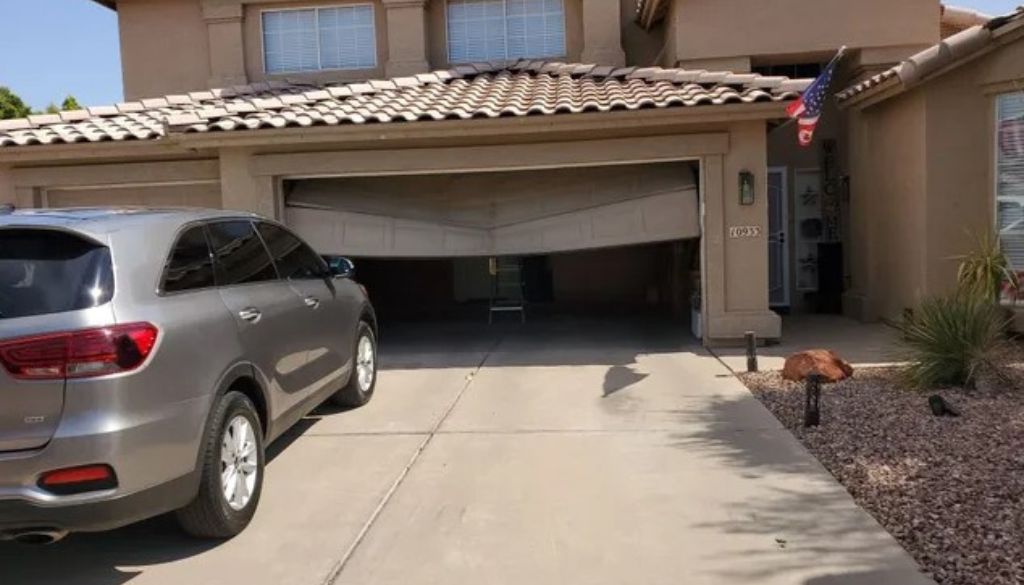
With extension springs, the indicators can be messier. One side of the door may lift while the other drags. The door might jam at an angle. A cable may come off the sheave. In some cases, the springtime itself is visibly elongated or separated.
Not every stopping working spring breaks easily at one time. Some damage gradually. The opener might reverse because it detects excess force. The door might wait a foot off the floor, which is a typical tension point because that is where the spring system has to do one of the most raising work. Property owners often attempt to solve that by changing opener force settings, however that deals with the signs and symptom rather than the cause.
A garage door opener must never be utilized to compensate for a falling short springtime. That is just how trolleys bend, equipments strip, and take a trip restrictions obtain tossed off.
Why springtime replacement is hardly ever a do it yourself job
There are home repair services where patience and a good video tutorial can take you far. Garage door spring substitute is not one of them.
The issue is stored energy. Springs hold sufficient pressure to raise a hefty door repeatedly. Launching or using that force without the right tools and technique can create severe injury. Torsion springtimes are specifically unrelenting because winding bars can slide, cones can fracture, shafts can spin all of a sudden, and set screws can confiscate or stop working. Extension systems bring different dangers, particularly when wires and wheels are under tension.
There is likewise the issue of sizing. Springs are not one-size-fits-all. 2 doors that look almost the same from the street may require really various springtimes relying on door weight, insulation, home window sections, track span, drum size, and clearance. Setting up the wrong spring can leave the door as well hefty, too light, or uneven via its travel.
The dangers that make do it yourself replacement an inadequate idea are rather consistent:
- Incorrect spring sizing throws off door equilibrium and increases wear on the opener and cables.
- Improper winding or extending can launch saved power violently.
- Old equipment may fail throughout substitute, especially bearings, cones, sheaves, and lower brackets.
- A misbalanced door can come off track or close unpredictably.
- Force-setting the opener after a bad repair work can develop a crush hazard.
Professional service technicians do greater than swap springs. They consider or compute the door, match the cycle score, evaluate the shaft or track system, verify cord problem, oil moving components where suitable, and examination balance manually prior to reconnecting the opener. That series matters.
Why both springtimes are generally changed together
On two-spring torsion systems, home owners frequently ask whether they can change only the busted springtime and leave the various other one alone. Technically, yes. Virtually, it is typically an incorrect economy.
If one spring has actually reached the end of its cycle life, the various other springtime has actually likely been with the very same variety of cycles. Also if it has not damaged yet, it is commonly close. Changing only one spring can additionally create imbalance if the continuing to be spring has tired out and shed some initial force.
The exact same reasoning relates to paired extension springtimes. Matching lift on both sides of the door is necessary. A fresh spring on one side and a tired springtime on the other side can trigger unequal traveling, cable television problems, and track stress.
There are exemptions. On a more recent door where one spring was harmed prematurely by deterioration or a production issue, replacing one may be reasonable. On older systems, paired replacement is typically the smarter service decision.
The fixing discussion need to consist of cycle life, not just price
Spring quotes can vary commonly, and much of that distinction comes down to worldly top quality, cycle score, and whether the estimate consists of associated solution work. A low number is not always a far better value if it gets a standard spring that will be tired once more in a couple of years.
For a family that makes use of the garage as the main point of entrance, an upgrade from a 10,000-cycle springtime to a 20,000-cycle springtime frequently makes sense. If the door runs six times a day, 10,000 cycles can be tired in under 5 years. At 4 cycles a day, it lasts longer, yet still not for life. A higher-cycle springtime may cost even more in advance and conserve cash in stayed clear of repeat calls.
This matters for industrial garage door repair also, though the math gets more severe. A service bay door, loading dock door, or auto parking framework door can log heavy daily use. In those setups, springtime selection is connected straight to downtime danger. One bad failure can interrupt procedures, delay distributions, or create a safety and security concern for employees.
What a good spring substitute browse through ought to include
When a proficient specialist manages garage door spring replacement, the visit ought to cover more than the evident broken part. Great leaves the whole door operating better than it did prior to the failing, not merely functional enough to close.
A complete check out usually includes the following:
|Service element|Why it matters||-- |--|| Spring sizing confirmation|Protects against underpowered or crowded out balance|| Cord and drum or pulley examination|Finds fraying, misalignment, and wear brought on by springtime failing|| Bearing and bracket check|Verifies the shaft or track equipment can handle fresh springtime tension|| Door equilibrium examination|Makes certain the opener is not lifting a hefty or runaway door|| Opener reconnection and security examination|Verifies turnaround system and traveling after the door is well balanced|
That is the distinction in between a real repair work and a slim components swap. If the door equilibrium is not examined by hand before the opener is returned into service, the work is incomplete.
Torsion versus expansion in everyday use
Homeowners determining in between repair work and innovation typically ask whether they ought to transform an older expansion system to torsion. Sometimes the answer is of course, occasionally it is not worth the expense.
Torsion systems usually provide smoother travel, better control, and less complicated accuracy tuning. They are typically the far better lasting setup, particularly for much heavier shielded doors or double-width doors. They likewise have a tendency to pair nicely with quieter contemporary openers because the general activity is a lot more stable.
Extension systems can still do effectively on lighter doors when all elements remain in good condition. If the tracks are aligned, the pulleys are sound, and safety cable televisions are mounted, an expansion system might proceed offering well. The decision depends upon the age of the door, the problem of the hardware, and whether the client intends to invest in a wider upgrade.
I have seen older expansion setups that were maintained appropriately and ran much better than neglected torsion systems. The hardware type issues, yet craftsmanship and upkeep issue equally as much.
The opener is not the celebrity of this repair work, but it often gets dragged into it
It is common for people to call regarding a garage door opener because the remote still works, the electric motor hums, and the door does not move. That symptom often traces back to the spring system. If the springtime is damaged, the opener may attempt to raise a door that has actually unexpectedly become far larger than expected.
Some opener versions will stop and reverse. Others will certainly grind, pressure, or move the door a couple of inches before surrendering. On chain-drive units, you might see the rail flexing under tons. On screw-drive or belt-drive systems, the carriage can delay or disconnect.
After springtime substitute, the opener should be reconsidered for force setups, traveling limitations, and arm accessory condition. If the door was operated repeatedly with a damaged springtime, the opener might already have damages. I have actually changed lots of springs only to discover the client likewise needed a gear kit or a complete opener replacement since the device had been compelled a lot of times.
That crossover is one reason incorporated service matters. The very best garage door repair specialists check out the whole assembly, not simply the stopped working spring.
Residential and commercial doors call for different judgment
Residential garage door repair frequently fixates comfort, safety and security, and noise. Families desire a door that opens smoothly, seals effectively, and does not wake the house during very early separations. Spring sizing because setting is influenced by insulation, ornamental hardware, wind-rated reinforcement, and use habits.
Commercial garage door repair moves the top priorities. Cycle quantity, uptime, and hardware resilience transfer to the front. Doors are typically larger, larger, or exposed to harder problems. Moving steel doors, sectional overhead doors in storage facilities, and full-view light weight aluminum doors in solution bays all place various needs on their spring systems.
That suggests replacement decisions can not be copied over from a house to a shop or filling location. A springtime that is fine for a rural two-car garage may be entirely wrong for an industrial application with frequent operation and higher liability.
Maintenance that helps springs last longer
No springtime lasts forever, but a couple of behaviors can maintain the rest of the system from increasing its decline. Click here for more Normal aesthetic assessment aids catch fraying wires, bent hinges, loose brackets, or pulley wear before they create a larger failing. Lubing steel rollers, hinges, and torsion springs with an ideal garage door lubricating substance can decrease noise and surface area corrosion, though lubrication is not a replacement for appropriate balance.
The most useful thing a homeowner can do is pay attention to adjustments. If the door sounds harsher than it did last month, feels heavier by hand, or begins dropping in odd areas, that deserves a solution call. Springs hardly ever stop working without a little caution somewhere in the system.
For property managers dealing with several doors, keeping solution days and springtime cycle scores on data makes preparing easier. Preventative replacement is typically less costly than emergency situation after-hours repair service, specifically on doors that protect stock or vehicles.
When replacement turns into a larger conversation
Sometimes a springtime failing is just a springtime failing. Other times, it subjects a bigger issue. A door may be undersized for the opening, the track might be tired out, or the entire arrangement may be overdue for innovation. If the door is older, improperly protected, or loud sufficient to disrupt nearby rooms, spring substitute can be the minute to discuss a broader garage door installation upgrade.
That does not mean every busted spring ought to set off a sales pitch. Commonly, a tidy springtime substitute is the right telephone call. Yet when the panel areas are rusted, the hardware is used throughout, and the opener is near the end of its life, patching one component at a time ends up being expensive.
A great specialist must have the ability to discuss the options simply: repair what is there, convert the springtime system if helpful, or replace the door package if the economics aim that way. Clear judgment matters more than hostile recommendations.
What property owners must keep in mind when the spring breaks
If the door suddenly will not open, stand up to need to maintain hitting the remote. Separating the opener and trying to lift the door by hand can additionally be high-risk if the door is big or the springtime is completely damaged. The safest feedback is to quit making use of the door, maintain people free from it, and call for service.
If the only automobile is trapped inside, inform the fixing company that when reserving. Some scenarios can be prioritized, and some doors can be opened up meticulously by skilled technicians despite having an unsuccessful spring, depending upon size, damages, and access. What ought to not take place is a homeowner improvisating with clamps, crowbar, or brute force.
Garage door springtime replacement is not glamorous, however it is just one of one of the most consequential repair services in the entire door system. Torsion and extension springs may work in different ways, however both are worthy of regard. When they are sized appropriately, set up appropriately, and supported by sound hardware, the door feels virtually insubstantial. When they fall short, every weak point in the system shows up fast.
That is why understanding the spring kind on your door issues. It aids you ask far better concerns, spot weak suggestions, and choose repairs that safeguard the door, the opener, and the people that utilize it every day.