DIY vs Specialist Garage Door Repair: What's the Safer Option?
A garage door is simple to take for given till it stops midway, makes a sharp bang, or declines to open when you are already late. After that it comes to be evident what it truly is: the biggest relocating item in a lot of homes, often evaluating more than 100 extra pounds, sometimes far more, and running under sufficient springtime tension to cause serious injury in a split second.
That is why the DIY versus professional concern matters much more right here than it does with numerous other home repair work. Painting a room terribly generally sets you back time and pride. Taking care of a garage door the wrong way can cost fingers, eyesight, vehicle damages, or a trip to the emergency room. I have seen homeowners successfully tighten loose hardware, change weather condition stripping, and reprogram a garage door opener easily. I have actually additionally seen tracks curved irreparable since somebody required a door that was currently off equilibrium, and I have seen torsion springtime tasks tried with the wrong tools, which is just one of the fastest methods to turn a repair into a hazard.
The more secure option depends upon the precise problem, the door system, and the individual doing the job. Some tasks are reduced threat and well within reach for a cautious property owner. Others belong squarely in the hands of a qualified service technician. The vital part is understanding the difference prior to you start.
Why garage doors are various from normal home repairs
A garage door looks easy from the exterior. Panels increase, panels boil down, opener does the lifting. Actually, the opener usually guides the activity greater than it does the hefty lifting. The genuine muscular tissue originates from the spring system, either torsion springtimes mounted above the door or expansion springs running alongside the horizontal tracks. Those springs store and launch power every time the door moves.
That kept energy is what makes garage door repair a different classification of work. An appropriately well balanced door needs to feel surprisingly light when detached from the opener. An out of balance one can go down hard, strain the opener, twist the tracks, and snap wires. When a springtime breaks, individuals commonly define it as sounding like a gunfire inside the garage. That is not an exaggeration.
There is also the problem of weight and geometry. Garage doors relocate through a directed arc on rollers and tracks. If one side binds or one cable slips, the entire assembly can rack out of placement. What starts as a simple squeak can come to be a misaligned door hanging under tension. At that point, strength is the most awful possible strategy.
For business garage door repair, the risks can be even higher. Commercial doors are usually bigger, larger, cycled more regularly, and paired with higher-duty hardware. The same basic principles apply, but the loads and consequences enhance. A blunder on a moving steel service door at a storehouse is not simply a property owner trouble, it can shut down access, influence shipments, and develop a work environment safety issue.
The repair work house owners can normally handle safely
There is a practical happy medium in between doing every little thing on your own and asking for every minor noise. A home owner with patience, a ladder, standard hand tools, and the determination to comply with the producer's instructions can frequently take care of regular maintenance and a few low-risk fixes.
Tasks like cleaning picture eyes, replacing remote batteries, inspecting whether the wall control has a lock setup made it possible for, and lubricating rollers, joints, and springs with a garage-door-safe lubricant are normally straightforward. So is aesthetically checking the tracks for particles or evident blockages. Weather condition seal replacement under or sides of the door additionally tends to be workable, specifically when the door itself is otherwise operating correctly.
Small modifications to opener settings can also be sensible, however just if you understand what you are changing. Travel limitations and pressure settings affect exactly how far the door relocations and just how much resistance the opener tolerates prior to turning around. Establish those improperly and you can end up with a door that does not close completely, squashes the bottom seal right into the floor, or fails to turn around when it should. local garage door maintenance services The proprietor's hands-on matters below. So does restraint.
A lot of domestic garage door repair calls become basic problems a house owner can have identified securely from the ground. I have actually seen doors that "fell short" since the hands-on lock was involved, openers that appeared dead due to the fact that a GFCI electrical outlet had stumbled, and safety and security sensing units that blinked due to the fact that a trash can lightly bumped one bracket out of placement. Those are fine examples of do it yourself being flawlessly appropriate.
Where do it yourself ends up being risky fast
The line gets went across the moment tension, weight, or architectural alignment enters into the task. Spring systems, lift cords, bottom braces, drums, and significant track improvements are not beginner job. Neither is a door that has actually come off its tracks or one that is visibly jagged when raised.
Garage door springtime replacement is one of the most usual example. Many house owners seek out a video, order springs online, and presume careful job will certainly suffice. In some cases they survive it. Sometimes they do not. The actual issue is that garage door springtimes are not simply parts, they are filled mechanical elements matched to a details door weight and height. The winding procedure calls for the best bars, the correct variety of turns, safe and secure collection screws, and a strong understanding of equilibrium screening. Making use of screwdrivers rather than winding bars, which still takes place more frequently than it should, is just one of those options that can go wrong instantly.
Cables create a similar false sense of simplicity. A frayed cable resembles a rope that needs changing. In method, it belongs to a system under load, connected right into drums, lower components, and spring tension. If a cord has actually come off one side, there is normally a reason. It might be a busted spring, a bent track, a taken roller, or an irregular door. Changing or resetting the cord without identifying the cause often produces a repeat failure.
Garage door opener issues likewise have layers. If the opener motor hums and the door hardly relocates, the root issue might not be the opener whatsoever. Maybe a busted springtime, stripped equipment, secured trolley, misaligned track, or door inequality. Changing a garage door opener without addressing a hefty door is costly and short-lived. A brand-new opener can not make up for poor technicians for extremely long.
A functional method to decide
When homeowners ask me whether they must try a repair, I generally tell them to judge the situation by risk, not confidence. Confidence is undependable. Danger is concrete.
If the repair work can be finished with the door completely shut, without touching tensioned components, and without placing any part of your body under a suspended tons, it may be a practical DIY task. If the repair service entails unwinding springtimes, loosening bottom braces, resetting cords, straightening out tracks that are sustaining a crammed door, or forcing motion when something is jammed, it is time to stop.
Here is a valuable rule of thumb for the typical home. If you can safely detect the problem with a flashlight, a ladder, and the proprietor's manual, you might have the ability to fix it. If the following action needs specialized bars, clamps, deep mechanical judgment, or uncertainty about spring tension, you are outside risk-free do it yourself territory.
The concealed cost of obtaining it practically right
A garage door does not need to fail entirely to become hazardous. A repair that is simply "close enough" can shorten the life of expensive components and produce a delayed problem.
Take door balance. If the springs are a little mismatched after a repair service, the opener might still raise the door. That can fool a homeowner right into thinking the job was successful. Yet an opener that needs to deal with added weight every cycle breaks gears, strains the rail, and gets too hot the motor. Over a couple of months, a modest spring error becomes a much larger bill.
Misaligned tracks produce comparable problem. A track can be close sufficient for operation while still causing rollers to put on unevenly, hinges to bind, and the door to tremble itself loose over time. The house owner listens to more sound, includes much more lubricant, and misses out on the real issue.
This matters a lot more with garage door installment. New doors need to be matched to the opening, sustained correctly, sealed effectively, and well balanced precisely. A negative setup might look penalty on the first day and expose its problems in the first period of temperature swings. I have seen doors with bad leading area placement leakage water and chilly air, and brand-new installs with under-sized springtimes that made the opener work much harder than it should. Specialist setup is not just about rate. It has to do with getting the system right from the start.
Safety attributes assist, however they do not make risky repair work safe
Modern openers consist of image eyes, auto-reverse systems, rolling-code remotes, and handbook launch features. Those are important defenses, however they are usually misconstrued. The auto-reverse function, for example, safeguards against entrapment during closing. It does not make spring work secure. Photo eyes can stop a door from shutting on a youngster or family pet. They do not stop a cord from whipping loose throughout a stopped working fixing attempt.
The manual release cable is another good example. It is there so you can separate the opener and run the door by hand throughout power blackouts or troubleshooting. Yet if the springtime is damaged and the door is hefty, drawing the launch without recognizing the balance can leave you holding a door that wants to bang down. I have actually enjoyed people discover that lesson the difficult way.
Safety systems are a layer, not a replacement for mechanical control.
When calling a specialist is plainly the safer choice
There are situations where doubt just loses time. If any of the complying with hold true, specialist help is the safer course:
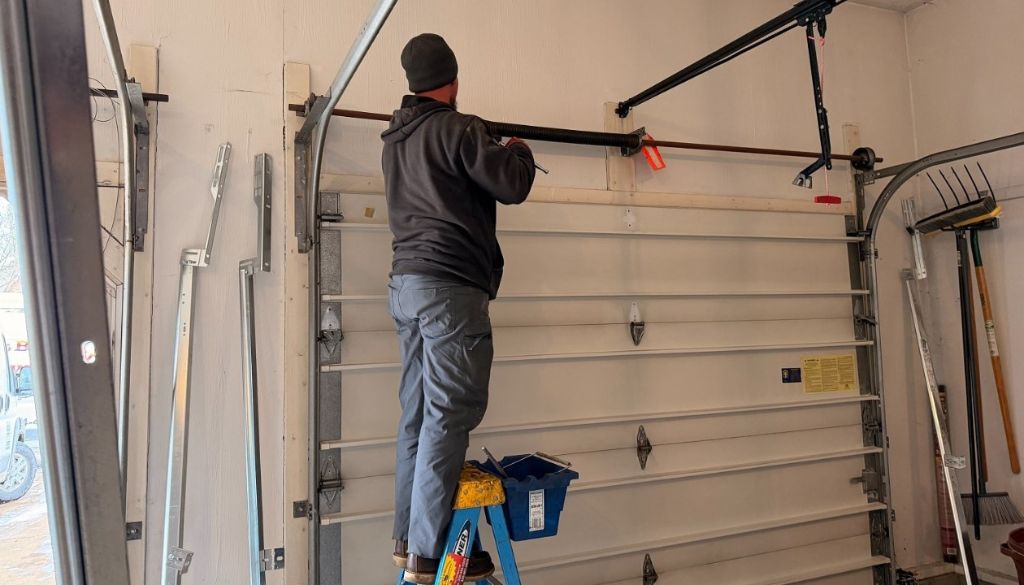
- The spring is damaged or you presume a spring failure.
- A lift cord is frayed, loose, or off the drum.
- The door is uneven, off track, or goes down when partially opened.
- The bottom braces, torsion system, or bearing plates need work.
- The opener stress, stalls, or reverses because the door is also hefty or unbalanced.
That listing covers a lot of the risky hire both domestic garage door repair and light commercial garage door repair. It is not remarkable, just practical. When pressure and kept power are entailed, expertise matters.
What a specialist brings that a video clip cannot
Skill is only part of the response. Tools and pattern acknowledgment issue equally as much.
A skilled service technician can usually listen to a problem before completely seeing it. The audio of a dry bearing, a chain established as well tight, a loose hinge, or a springtime that has lost balance over time is distinct when you have actually worked around adequate doors. That sort of experience reduces diagnosis and avoids the typical mistake of replacing the wrong component first.
Professionals additionally bring the appropriate hardware. Springs are selected by cable size, inside size, length, and door weight demands, not by rough aesthetic contrast. Rollers come in various stem lengths and materials. Track spacing, drum kinds, cable television sizes, and opener compatibility all issue. A home owner typically stores by look. A professional usually stores by specification.
There is one more advantage individuals do not always consider: accountability. Respectable business guarantee their job. If the door is still out of equilibrium, if the opener pressure needs a final tweak, or if a newly mounted part exposes an associated weakness, you have someplace to call. That is worth greater than individuals admit, especially when the garage door is the major everyday entry to the home.
The cash question, honestly
DIY is commonly framed as the cheaper path, and in some cases it is. If all you require is lubricant, a substitute remote, fresh batteries, brand-new climate seal, or sensor positioning, doing it on your own can conserve a service telephone call and make best sense.
But price contrasts get misshaped when individuals overlook danger and remodel. A property owner may save money on paper by trying Garage door spring replacement alone. If the springtimes are incorrect, the winding is uneven, the opener gets damaged, or a car panel obtains dented by a dropping door, the financial savings disappear rapidly. Also without injury, one failed attempt can cause spending for emergency solution plus the parts you currently bought.
Professional job also often tends to be much more reliable in diagnosing the entire system. A technician dealing with a garage door opener grievance may observe fractured joints, aging rollers, and a door that is running five pounds too heavy on one side. Taking care of those together can prevent serial failures. Do it yourself often deals with signs individually, which feels cheaper up until the second and 3rd troubles show up.
For businesses, the calculation is much more straight. Industrial garage door repair typically influences staffing, packing schedules, security, and client gain access to. Downtime can cost much more than the fixing itself. In that setup, trying to save cash with improvisated fixes normally backfires.
The jobs that make sense for careful homeowners
For property owners who intend to remain entailed without entering dangerous area, this is the zone I advise:
- Clean and line up photo eye sensors.
- Lubricate joints, rollers, springs, and bearings with the appropriate product.
- Replace remote batteries, keypads, and some wall controls.
- Inspect weather seals and replace used base or perimeter seal material.
- Test door equilibrium just if you understand the manual release and the door is otherwise operating normally.
That last factor deserves care. An equilibrium test can be valuable, yet just on a door that is currently moving normally and just with the opener separated according to the manual. Raise the door partway and see whether it remains in area. If it wanders hard up or down, reconnect the opener and call a pro. Do not start readjusting springtimes since the test told you something is off. The examination is for diagnosis, not license.
A few real-world scenarios
A property owner hears a loud pop and discovers the door opens up a couple of inches, after that stops. The opener is still powered, the rail steps, and the remote works. This is traditional springtime failing area. The much safer option is professional service. Continuing to run the opener can burn out gears or bend hardware.
Another house owner notices the door will not shut unless they hold the wall surface button down. In many cases, that indicate image eye imbalance or sensing unit obstruction. Wipe the lenses, examine the braces, make sure both indicator lights reveal regular status, and clear anything in the light beam. That is a reasonable do it yourself first step.
A 3rd homeowner sees one side of the door hanging less than the various other. Maybe a cord came off, possibly a roller left the track, possibly a spring issue triggered the door to rack. Either way, do not maintain cycling it. A jagged door is unstable. That is a solution call.
Then there is the typical "brand-new opener" error. Someone replaces the garage door opener since the old one had a hard time, just to find the brand-new device has a hard time too. The actual problem was an out of balance door or worn springtime system all along. This happens commonly enough that I hardly ever presume the opener is the main failure up until the door itself passes a balance check.
How to choose the right service company
Not all professional help is equal. The much safer choice is only much safer if the person doing the work understands the trade.
Look for a company that works on your type of system consistently, clarifies the problem clearly, and agrees to compare immediate repairs and optional upgrades. Good technicians do not need theatrics. They can reveal you the worn part, describe why it fell short, and inform you what takes place if you hold off the repair. That sort of plain talk is normally a better indicator than a tough sales pitch.
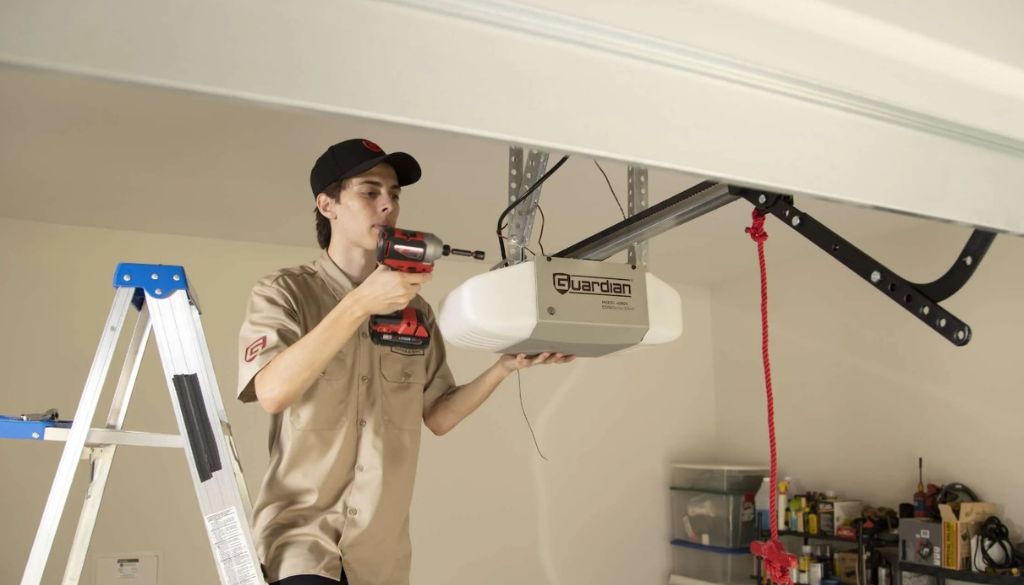
For garage door installment, ask about insulation alternatives, cycle ratings for springs, opener compatibility, and warranty insurance coverage. For commercial garage door repair, ask whether they service the details door type on your structure, such as sectional steel, rolling steel, or high-speed doors. Accuracy matters since these systems are not interchangeable in technique, also when they look similar from a distance.
The safer option, most of the time
For low-risk upkeep and basic troubleshooting, do it yourself can be sensible and cost-effective. Home owners must know just how to tidy sensing units, lubricate relocating components, look for noticeable blockages, and recognize basic garage door opener functions. That sort of participation often helps capture tiny problems prior to they grow.
But when a repair service includes spring stress, cables, architectural placement, hefty training, or unpredictable diagnosis, expert garage door repair becomes the safer selection by a large margin. That is particularly real for Garage door spring replacement, off-track doors, significant opener issues tied to stabilize, and almost all business garage door repair situations.
A garage door is not just one more benefit appliance. It is a crammed mechanical system that strives, often several times a day, with very little area for negligent improvisation. Respecting that fact is what maintains a small aggravation from becoming a serious accident.