DIY vs Professional Garage Door Repair: What's the Safer Choice?
A garage door is simple to take for approved till it quits halfway, makes a sharp bang, or rejects to open up when you are already late. After that it comes to be apparent what it truly is: the biggest moving item in a lot of homes, often considering more than 100 pounds, occasionally a lot more, and running under sufficient springtime tension to create major injury in a split second.
That is why the do it yourself versus professional concern matters much more here than it makes with numerous other home repairs. Painting a room terribly usually sets you back time and satisfaction. Dealing with a garage door the wrong way can cost fingers, vision, automobile damage, or a trip to the emergency room. I have actually seen home owners effectively tighten loosened hardware, change weather condition removing, and reprogram a garage door opener easily. I have actually also seen tracks curved beyond repair since somebody compelled a door that was currently off balance, and I have seen torsion springtime work attempted with the wrong devices, which is just one of the fastest methods to turn a repair into a hazard.
The safer choice relies on the exact trouble, the door system, and the person doing the work. Some tasks are reduced danger and well accessible for a careful home owner. Others belong directly in the hands of an experienced service technician. The vital part is recognizing the distinction before you start.
Why garage doors are various from ordinary home repairs
A garage door looks straightforward from the exterior. Panels rise, panels boil down, opener does the training. In truth, the opener usually overviews the movement more than it does the heavy training. The real muscular tissue comes from the springtime system, either torsion springtimes placed above the door or extension springs running along with the straight tracks. Those springtimes shop and launch energy whenever the door moves.
That saved energy is what makes garage door repair a different group of work. An effectively balanced door must really feel remarkably light when detached from the opener. An out of balance one can go down hard, pressure the opener, twist the tracks, and snap cords. When a springtime breaks, individuals usually define it as seeming like a gunfire inside the garage. That is not an exaggeration.
There is also the concern of weight and geometry. Garage doors move via a directed arc on rollers and tracks. If one side binds or one wire slides, the whole setting up can rack out of positioning. What begins as a straightforward squeak can end up being a jagged door hanging under tension. Then, brute force is the worst feasible strategy.
For commercial garage door repair, the stakes can be also higher. Business doors are usually bigger, much heavier, cycled much more regularly, and paired with higher-duty hardware. The exact same fundamental concepts apply, yet the tons and consequences enhance. A blunder on a moving steel service door at a storage facility is not just a home owner trouble, it can close down access, influence distributions, and develop an office safety issue.
The fixings house owners can typically handle safely
There is a sensible happy medium between doing everything yourself and asking for every small sound. A home owner with patience, a ladder, standard hand tools, and the readiness to comply with the supplier's instructions can commonly manage routine upkeep and a few low-risk fixes.
Tasks like cleaning photo eyes, replacing remote batteries, inspecting whether the wall surface control has a lock setting made it possible for, and lubricating rollers, joints, and springtimes with a garage-door-safe lubricant are generally uncomplicated. So is visually checking the tracks for debris or noticeable blockages. Climate seal substitute under or sides of the door also has a tendency to be convenient, specifically when the door itself is otherwise running correctly.
Small adjustments to opener settings can likewise be practical, however just if you comprehend what you are transforming. Traveling limitations and force setups impact just how far the door steps and how much resistance the opener endures prior to turning around. Set those improperly and you can end up with a door that does not close fully, crushes the lower seal into the flooring, or stops working to turn around when it should. The owner's manual issues below. So does restraint.
A great deal of residential garage door repair calls become basic issues a house owner might have found securely from the ground. I have seen doors that "fell short" because the hand-operated lock was involved, openers that seemed dead due to the fact that a GFCI outlet had actually tripped, and safety and security sensors that blinked due to the fact that a trash can lightly bumped one bracket out of placement. Those are examples of do it yourself being completely appropriate.
Where do it yourself ends up being high-risk fast
The line obtains went across the minute stress, weight, or architectural alignment becomes part of the job. Springtime systems, lift wires, lower brackets, drums, and major track improvements are not novice job. Neither is a door that has actually come off its tracks or one that is noticeably misaligned when raised.
Garage door spring substitute is one of the most common example. Many property owners seek out a video clip, order springs online, and think mindful job will certainly suffice. Often they make it through it. Occasionally they do not. The real issue is that garage door springs are not simply components, they are loaded mechanical parts matched to a details door weight and height. The winding procedure calls for the best bars, the proper variety of turns, protected set screws, and a strong understanding of equilibrium testing. Making use of screwdrivers rather than winding bars, which still happens more frequently than it should, is just one of those options that can go wrong instantly.
Cables develop a similar incorrect feeling of simpleness. A torn cord resembles a rope that requires replacing. In method, it belongs to a system under tons, tied right into drums, lower components, and springtime stress. If a cord has come off one side, there is usually a reason. It might be a damaged spring, a bent track, a seized roller, or an unequal door. Replacing or resetting the cable television without diagnosing the cause commonly creates a repeat failure.
Garage door opener concerns likewise have layers. If the opener electric motor hums and the door barely moves, the origin issue might not be the opener in all. It could be a busted spring, removed equipment, locked cart, misaligned track, or door inequality. Changing a garage door opener without attending to a hefty door is costly and short-term. A brand-new opener can not make up for bad mechanics for extremely long.
A sensible way to decide
When house owners ask me whether they must try a repair service, I usually inform them to judge the scenario by threat, not self-confidence. Confidence is unreliable. Danger is concrete.
If the repair service can be done with the door completely closed, without touching tensioned elements, and without putting any type of component of your body under a put on hold lots, it might be a practical do it yourself task. If the repair work includes relaxing springtimes, loosening up lower brackets, resetting wires, straightening out tracks that are sustaining a packed door, or forcing motion when something is jammed, it is time to stop.
commercial garage door repairHere is a valuable rule of thumb for the ordinary house. If you can securely detect the problem with a flashlight, a ladder, and the proprietor's manual, you might have the ability to fix it. If the next action calls for specialized bars, clamps, deep mechanical judgment, or uncertainty about spring tension, you are outdoors risk-free DIY territory.
The hidden expense of getting it virtually right
A garage door does not have to stop working completely to become hazardous. A repair service that is merely "close enough" can shorten the life of pricey parts and create a delayed problem.
Take door balance. If the springs are a little mismatched after a repair work, the opener might still lift the door. That can trick a homeowner into believing the work was successful. But an opener that needs to fight extra weight every cycle wears out equipments, pressures the rail, and overheats the motor. Over a few months, a small spring blunder turns into a much bigger bill.
Misaligned tracks produce comparable problem. A track can be close sufficient for operation while still causing rollers to put on unevenly, hinges to bind, and the door to tremble itself loose gradually. The property owner hears even more sound, adds a lot more lubricating substance, and misses out on the real issue.
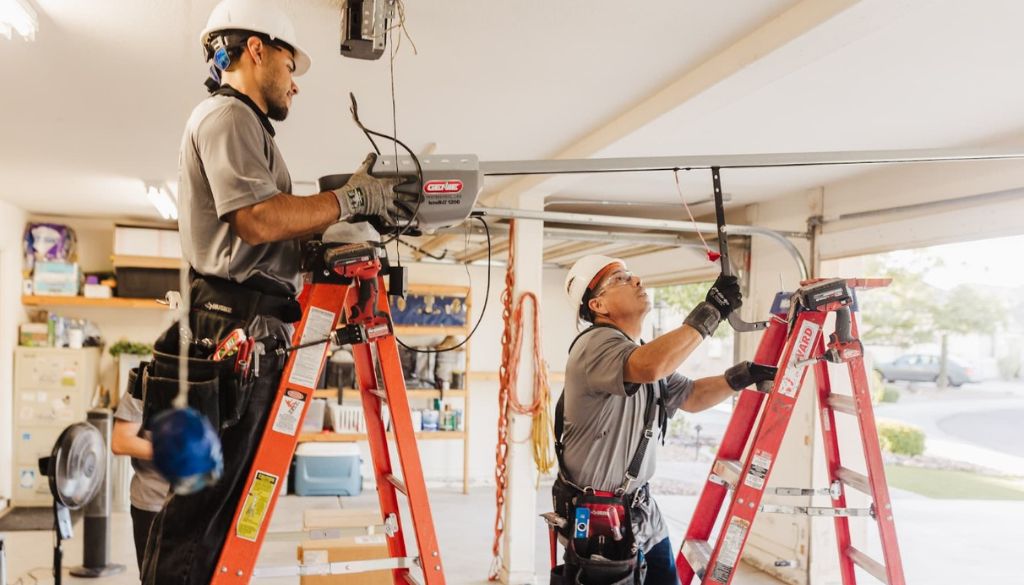
This matters much more with garage door installation. New doors need to be matched to the opening, sustained correctly, secured effectively, and balanced precisely. A bad setup may look fine on day one and disclose its imperfections in the very first period of temperature swings. I have seen doors with poor top area alignment leakage water and cold air, and brand-new installs with under-sized springtimes that made the opener work far harder than it should. Specialist installment is not just about speed. It is about getting the system right from the start.
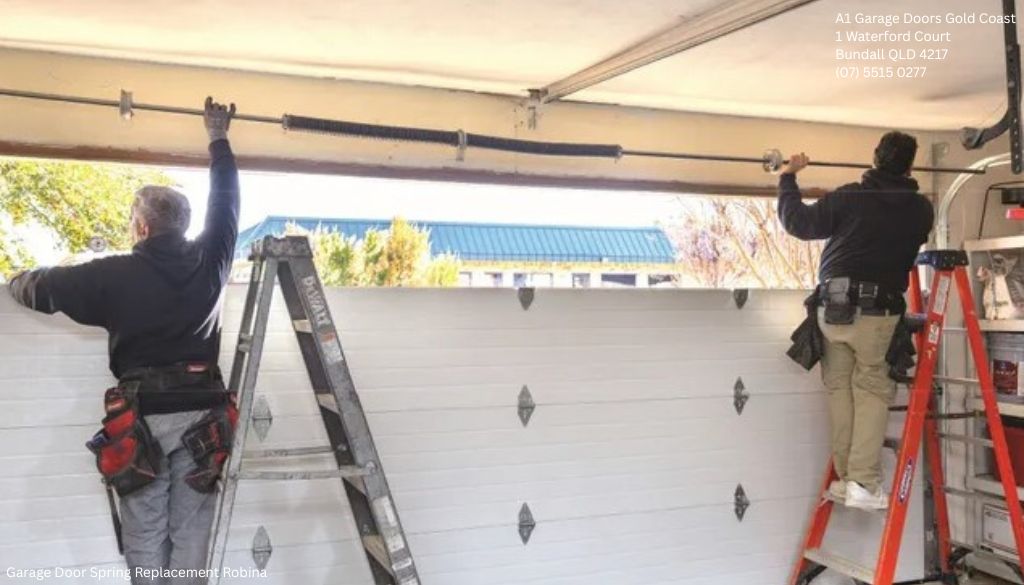
Safety attributes help, yet they do not make dangerous repair services safe
Modern openers consist of photo eyes, auto-reverse systems, rolling-code remotes, and manual launch features. Those are valuable defenses, yet they are commonly misinterpreted. The auto-reverse feature, as an example, safeguards against entrapment during closing. It does not make springtime job risk-free. Photo eyes can stop a door from shutting on a kid or pet. They do not prevent a wire from whipping loose during a failed repair work attempt.
The guidebook release cord is one more fine example. It exists so you can disconnect the opener and run the door by hand throughout power blackouts or troubleshooting. But if the springtime is damaged and the door is heavy, drawing the launch without comprehending the balance can leave you holding a door that wishes to pound down. I have seen individuals find out that lesson the tough way.
Safety systems are a layer, not an alternative to mechanical control.
When calling an expert is plainly the safer choice
There are scenarios where hesitation simply wastes time. If any of the adhering to hold true, professional help is the safer path:
- The spring is damaged or you presume a spring failure.
- A lift cord is torn, loose, or off the drum.
- The door is jagged, off track, or goes down when partially opened.
- The bottom brackets, torsion system, or bearing plates need work.
- The opener pressures, stalls, or turns around due to the fact that the door is as well hefty or unbalanced.
That checklist covers the majority of the high-risk call both property garage door repair and light industrial garage door repair. It is not significant, simply sensible. When pressure and saved energy are included, expertise matters.
What an expert brings that a video cannot
Skill is just part of the response. Tools and pattern recognition issue equally as much.
A skilled professional can frequently hear a problem prior to totally seeing it. The audio of a completely dry bearing, a chain set as well tight, a loose joint, or a spring that has actually stumbled over time is distinct when you have worked around adequate doors. That kind of experience reduces diagnosis and stops the typical error of changing the incorrect part first.
Professionals also bring the appropriate hardware. Springs are chosen by wire dimension, inside size, length, and door weight demands, not by rough visual comparison. Rollers are available in different stem lengths and materials. Track spacing, drum types, cable television lengths, and opener compatibility all issue. A home owner commonly stores by look. A service technician usually shops by specification.
There is one more benefit people do not constantly consider: responsibility. Trustworthy firms guarantee their job. If the door is still out of equilibrium, if the opener pressure needs a final tweak, or if a freshly set up part exposes a related weak point, you have someplace to call. That deserves more than individuals confess, especially when the garage door is the main day-to-day entryway to the home.
The money concern, honestly
DIY is often mounted as the more affordable route, and occasionally it is. If all you require is lube, a replacement remote, fresh batteries, new climate seal, or sensing unit alignment, doing it yourself can save a solution phone call and make excellent sense.
But expense comparisons get misshaped when individuals overlook danger and remodel. A home owner may conserve money theoretically by trying Garage door spring substitute alone. If the springtimes are incorrect, the winding is uneven, the opener gets harmed, or a car panel gets nicked by a falling door, the savings disappear promptly. Also without injury, one fell short attempt can result in paying for emergency service plus the parts you already bought.
Professional job additionally tends to be extra efficient in identifying the entire system. A professional managing a garage door opener grievance may observe split joints, maturing rollers, and a door that is running five extra pounds as well hefty on one side. Taking care of those together can stop serial failures. DIY frequently treats symptoms individually, which feels cheaper until the second and 3rd issues show up.
For businesses, the estimation is even more straight. Industrial garage door repair commonly impacts staffing, filling routines, safety and security, and customer accessibility. Downtime can set you back even more than the repair work itself. In that setup, trying to conserve money with improvised fixes generally backfires.
The tasks that make good sense for careful homeowners
For homeowners who want to remain entailed without stepping into dangerous region, this is the area I suggest:
- Clean and straighten photo eye sensors.
- Lubricate joints, rollers, springtimes, and bearings with the correct product.
- Replace remote batteries, keypads, and some wall controls.
- Inspect weather seals and replace used bottom or border seal material.
- Test door balance just if you recognize the manual release and the door is otherwise running normally.
That last point should have caution. A balance test can be helpful, however only on a door that is currently relocating normally and just with the opener disconnected according to the guidebook. Elevate the door partway and see whether it remains in area. If it drifts hard up or down, reconnect the opener and call a pro. Do not start readjusting springtimes due to the fact that the test told you something is off. The examination is for diagnosis, not license.
A couple of real-world scenarios
A property owner listens to a loud pop and finds the door opens a couple of inches, after that stops. The opener is still powered, the rail actions, and the remote works. This is classic spring failure area. The more secure option is specialist solution. Continuing to run the opener can wear out gears or bend hardware.
Another homeowner notices the door will not close unless they hold the wall surface switch down. In many cases, that indicate image eye imbalance or sensor blockage. Clean the lenses, examine the brackets, make certain both indicator lights reveal regular condition, and clear anything in the beam. That is a practical DIY initial step.
A third homeowner sees one side of the door hanging lower than the other. Perhaps a cord came off, maybe a roller left the track, perhaps a spring concern created the door to rack. In any case, do not keep cycling it. An uneven door is unstable. That is a service call.
Then there is the typical "brand-new opener" error. Someone replaces the garage door opener since the old one struggled, just to uncover the new device battles too. The genuine trouble was an unbalanced door or worn spring system the whole time. This happens usually enough that I seldom think the opener is the primary failure until the door itself passes an equilibrium check.
How to pick the appropriate service company
Not all specialist aid is equal. The much safer option is only more secure if the individual doing the job knows the trade.
Look for a company that works on your type of system consistently, describes the trouble clearly, and is willing to distinguish between urgent repair work and optional upgrades. Great technicians do not require theatrics. They can reveal you the worn part, clarify why it failed, and inform you what happens if you delay the fixing. That kind of simple talk is generally a far better indicator than a hard sales pitch.
For garage door setup, ask about insulation options, cycle rankings for springtimes, opener compatibility, and warranty insurance coverage. For industrial garage door repair, ask whether they service the particular door kind on your building, such as sectional steel, rolling steel, or high-speed doors. Precision matters since these systems are not interchangeable in method, also when they look comparable from a distance.
The safer choice, most of the time
For low-risk upkeep and simple troubleshooting, DIY can be reasonable and affordable. Home owners should understand exactly how to clean sensors, lube relocating components, look for obvious obstructions, and comprehend basic garage door opener functions. That sort of participation typically aids capture tiny problems before they grow.
But once a repair work includes springtime stress, cords, structural positioning, heavy lifting, or unsure diagnosis, professional garage door repair comes to be the much safer choice by a vast margin. That is specifically real for Garage door spring replacement, off-track doors, major opener issues linked to stabilize, and almost all business garage door repair situations.
A garage door is not simply another convenience home appliance. It is a packed mechanical system that works hard, frequently a number of times a day, with very little room for careless improvisation. Valuing that fact is what keeps a minor inconvenience from becoming a major accident.